 |
Labrador Iron MinesHoldings Limited |
|
 |
News Centre
|
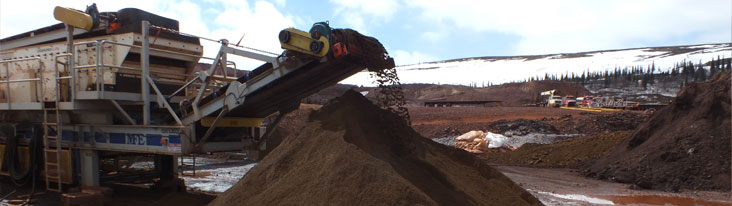
Iron Ore ProductsIron ore is the raw material required to make pig iron, which is the primary (98%) raw material used to make steel. Pure iron ore is virtually unknown on the surface of the Earth except as Fe-Ni alloys from meteorites and very rare forms of deep mantle xenoliths. Therefore, all sources of iron used in industry exploit iron oxide minerals, one of the primary forms of which is hematite. World resources of iron ore are estimated to exceed 800 billion tonnes of crude ore containing more than 230 billion tonnes of iron, implying an average iron content of 28.75%. Iron ore consists of oxygen and iron atoms bonded together to form the iron-oxide molecule and needs to have the oxygen removed through smelting to create a purer iron product. During this process, the iron ore is heated to extreme temperatures in blast furnaces where lump ore is more stable and therefore preferred. By comparison, iron fines must be sintered before charging to the furnace. The premium associated with lump ore has persisted historically, reflecting the approximate costs required to sinter iron fines, the availability of furnaces required and other benefits including ease of transportation. Canada produces over 30 million tonnes of iron ore annually, most of which is exported, placing Canada well in the top ten largest exporters of iron ore globally. Canadian produced iron ore is generally recognized as being of a high quality and is sought after by steelmakers globally. Since 1999, nearly all of Canada's iron ore production has come from the Labrador Trough region in Labrador and Quebec. As LIM's Project is located near current iron ore producers, the Company has been able to capitalize on the existing industry related infrastructure facilitating export of its product to the leading importers of Canadian iron ore. Iron Ore TypesThe major rock types mined for the production of metallic iron are: massive hematite, pisolitic goethite/limonite, which provide a "high-grade" ore, and banded metasedimentary ironstone, magnetite-rich metasomatite, to a much lesser degree, rocks rich in siderite, rocks rich in chamosite which provide a "low-grade" ore. The world's resources are dominated by low-grade ore. High-Grade OreCurrently most of the high grade iron ore mined in the world comes from large deposits of massive hematite rock formed by the in situ enrichment of a protore already enriched in iron, most commonly a banded iron formation (BIF). Another type of high-grade deposit is pisolitic limonite/goethite ore formed in ancient river channels. One of the primary forms of iron ore is hematite, or iron oxide (Fe2O3). Hematite has in the past been referred to as natural ore because certain hematite ores contain up to 69% iron and can be directly fed into blast furnaces in the steel milling process. Hematite ore also lends itself to the beneficiation process unlike lower grade magnetite, and is therefore mined as Direct Shipping ore. All of LIM's deposits are of the high grade hematite variety grading from 56% to as much as 69% iron content (or pure hematite)
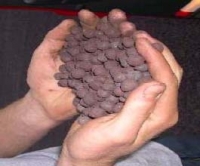
The consensus model for the formation of massive hematite ore is enrichment by the passage of fluids, which remove the non-iron-bearing minerals (dominantly chert), and to a much lesser extent add iron minerals. There are several variants of this model with the most accepted being enrichment by supergene processes. Recent models suggest enrichment by mass sideways and upward migration of dominantly superheated meteoric waters perhaps with a minor magmatic component. Historically high-grade ore has provided direct feed to smelters either as a raw lump or fines, also in a processed form such as sinter or pellets. During the smelting process, the iron ore is heated to extreme temperatures in blast furnaces where lump ore is more stable and therefore preferred. By comparison, iron fines must be sintered (hence sinter feed) before charging to the furnace. Fines are roasted on a conveyor oven with coke and limestone to produce sinter. The premium associated with lump ore has persisted historically, reflecting the approximate costs required to sinter iron fines, the availability of furnaces and other benefits including ease of transportation. Labrador Iron Mines expects its lump composition to account for approximately one-quarter of ore produced. Low-Grade OreLow-grade ore is a term applied to iron-rich rocks with cut-off grades in the range of 25-30% Fe. It was the main supply of iron ore for many centuries of the World's early history of production of iron. Since the 1950's North America's main supply has been low-grade ore. The dominant economic iron mineral in low-grade ore is magnetite. The ore may be beneficiated by a process known as wet-magnetic separation, being an initial fine grinding then passed of the fines over drum magnets to separate out magnetite to produce a high-grade concentrate. This concentrate may be agglomerated into 1 cm pellets and baked to produce a high grade feed for blast furnaces. Steel ManufacturingAlthough iron has many specific uses (pipes, fittings, engine blocks), its main use is in the production of steel. Steel has several desirable properties, making it the main structural metal in engineering and building projects and accounts for 90% of all metal used each year. Almost all of the iron ore that is mined globally is used for making steel. Raw iron by itself is not as strong and durable as needed for construction and other purposes. So raw iron is alloyed with a variety of elements (such as tungsten, manganese, nickel, vanadium, chromium) to strengthen and harden it, making useful steel for construction, automobiles, and other forms of transportation such as trucks, trains and train tracks. While the other uses for iron ore and iron are only a very small amount of the consumption, they provide excellent examples of the ingenuity and the multitude of uses that man can create from our natural resources. For example, iron is essential to animal life and necessary for the health of plants. The human body is 0.006% iron, the majority of which is in the blood. Blood cells rich in iron carry oxygen from the lungs to all parts of the body. Lack of iron also lowers a person's resistance to infection. Steel requirement falls into two basic sectors, the mass market and the high-end market. Developing nations would mostly derive demand from mass products, which would be addressed by the expanding steel production and trade volumes. On the other hand, the high-end market inclusive of the automobile industry would require better product and performance quality from the steel industry. In addition, increasing industry consolidation, backward integration and cost of raw materials is expected to have a stabilizing affect on steel prices. |
Home | Corporate Information | Shareholder Information | Projects | Environment & Social | News Center | Contact Us © 2026 Labrador Iron Mines All Rights Reserved | Disclaimer & Privacy Policy |